Digital Dread:
Navigating Cyber Anxieties and Ethics in the Age of AI
Live Virtual Seminar with Julie Ancis, PhD Saturday, August 1, 2026 (12-3:15pm EDT) Continuing Education: 5.0 CE Hours for APA, NYS Psychologists, NYS Social Workers
This timely seminar addresses the emerging mental health and ethical implications of our digital age, drawing on Dr. Julie R. Ancis’s pioneering work in cyberpsychology. As artificial intelligence, automation, social media, and information manipulation continue to reshape society at unprecedented speeds, mental health professionals are increasingly encountering clients whose presenting concerns include profound anxiety related to technological change, occupational uncertainty, information overload, misinformation exposure, and rapidly evolving ethical questions surrounding emerging digital technologies. These concerns often intersect with broader emotional, psychological, and occupational challenges encountered in contemporary clinical practice.
Drawing on the emerging discipline of cyberpsychology, this seminar provides an evidence-based framework for understanding the psychological mechanisms underlying technology-related distress, including technology-induced future anxiety, automation displacement fears, deepfake reality confusion, algorithmic helplessness, and the mental health impact of misinformation and disinformation.
Participants will also consider how rapidly evolving digital environments influence cognition, emotion, behavior, and psychological well-being, while examining the broader ethical implications of artificial intelligence, privacy, surveillance, digital communication, and the responsible integration of emerging technologies into professional practice.
Through discussion, practical exercises, and application to contemporary mental health practice, participants will explore evidence-informed strategies for addressing technology-related distress, promoting digital resilience, and strengthening ethical decision-making in an era of rapid technological change. The seminar also examines the implications of these developments for mental health professionals, including uncertainty about their professional futures and the evolving ethical considerations surrounding artificial intelligence and emerging technologies. Special attention will be given to how these challenges may affect different age groups, professions, and socioeconomic backgrounds.
LEARNING OBJECTIVES:
By the end of this educational activity, the participants will be able to:
Identify and describe the major psychological and ethical challenges associated with rapidly evolving digital technologies, including technology-induced future anxiety, automation displacement fears, misinformation and disinformation, and data-driven behavioral influence, as demonstrated through discussion and application to clinical practice scenarios.
Apply evidence-based strategies to promote digital resilience, ethical awareness, and psychological well-being among diverse populations through reflective application of intervention strategies and practice-based exercises.
Integrate ethical decision-making frameworks into professional practice when addressing issues related to artificial intelligence, automation, privacy, and emerging digital technologies, as demonstrated through participants’ analysis of ethical dilemmas and development of balanced, informed responses.
SEMINAR OUTLINE:
I. Overview of Cyberpsychology and Its Therapeutic Applications.
II. The Psychology of Technological Displacement Anxiety.
Dr. Ancis’s framework: Cyberpsychology in the Age of AI. Understanding automation anxiety and AI phobia. Psychological mechanisms of future-oriented tech anxiety. Professional identity threats across sectors.
III. Mis-Information and Reality Erosion.
The psychology of misinformation susceptibility. Mental health and ethical impacts of mis and disinformation. Vulnerable cognitive states.
IV. Clinical Interventions for Digital Age Anxieties.
Cognitive-behavioral approaches for tech anxiety. Building digital resilience and adaptation. Information literacy. Hands-On Activity. Developing a digital adaptation plan.
V. Ethical Implications.
Privacy and surveillance. Cybersecurity concerns. Digital divide. Generational and cultural trends. Case Study Exercise: Ethical Dilemma.
VI. Building Future Resilience and Adaptation.
Developing future-ready approaches. Preventive well-being strategies. Developing technological readiness. Future Trends Discussion. Emerging developments on the horizon. Building professional resilience.
VII. Q&A session.
Intended Audience:
This seminar is designed for psychologists, psychoanalysts, psychiatrists, social workers, counselors, marriage and family therapists, physicians, nurses, occupational therapists, speech-language pathologists, educators, trainees, and other mental health and healthcare professionals interested in understanding the psychological and ethical implications of artificial intelligence, cyberpsychology, and emerging digital technologies. The educational activity is intended for professionals seeking an evidence-based understanding of technology-related psychological distress, digital resilience, and ethical decision-making in an era of rapid technological change.
READINGS:
Ancis, J. R. (2020). The age of cyberpsychology: An overview. Technology, Mind & Behavior, 1(1), 9-23. DOI:10.1037/tmb0000009
Ancis, J. R. (2021, July 15). Disinformation techniques: How to spot them. Psychology Today (The Cyberpsychology Page).
Ancis, J. R. (2025). Cyberpsychology’s influence on modern computing. Communications of the ACM, 68, 72-29. https://doi.org/10.1145/3720535
Bin Naeem, S., & Kamel Boulos, M. N. (2021). COVID-19 misinformation online and health literacy: A brief overview. International Journal of Environmental Research and Public Health, 18(15), 8091.
Coeckelbergh, M. (2020). AI Ethics. MIT Press.
Feng, Z., Hu, C., Chen, S., Xu, J., Zhang, Y., & Hao, M. (2025). Impact of AI workplace anxiety on life satisfaction among service industry employees: Exploring mediating and moderating factors. Frontiers in Psychology, 16, 1603393. doi: 10.3389/fpsyg.2025.1603393
Hu, B., Mao,Y., Kim, K.J. (2023). How social anxiety leads to problematic use of conversational AI: The roles of loneliness, rumination, and mind perception. Computers in Human Behavior, 145, 107760. https://doi.org/10.1016/j.chb.2023.107760.
Hu, C., et al. (2025). Impact of AI workplace anxiety on life satisfaction: Mediating role of negative emotions, moderating role of social support. Frontiers in Psychology, 16.
Kim, J.J.H., Soh, J., Kadkol, S. et al. AI Anxiety: A comprehensive analysis of psychological factors and interventions. AI Ethics5, 3993–4009 (2025). https://doi.org/10.1007/s43681-025-00686-9
Valtonen, A., et al. (2025). AI and employee wellbeing in the workplace: An empirical study. Journal of Business Research, 199.
ABOUT THE INSTRUCTOR:
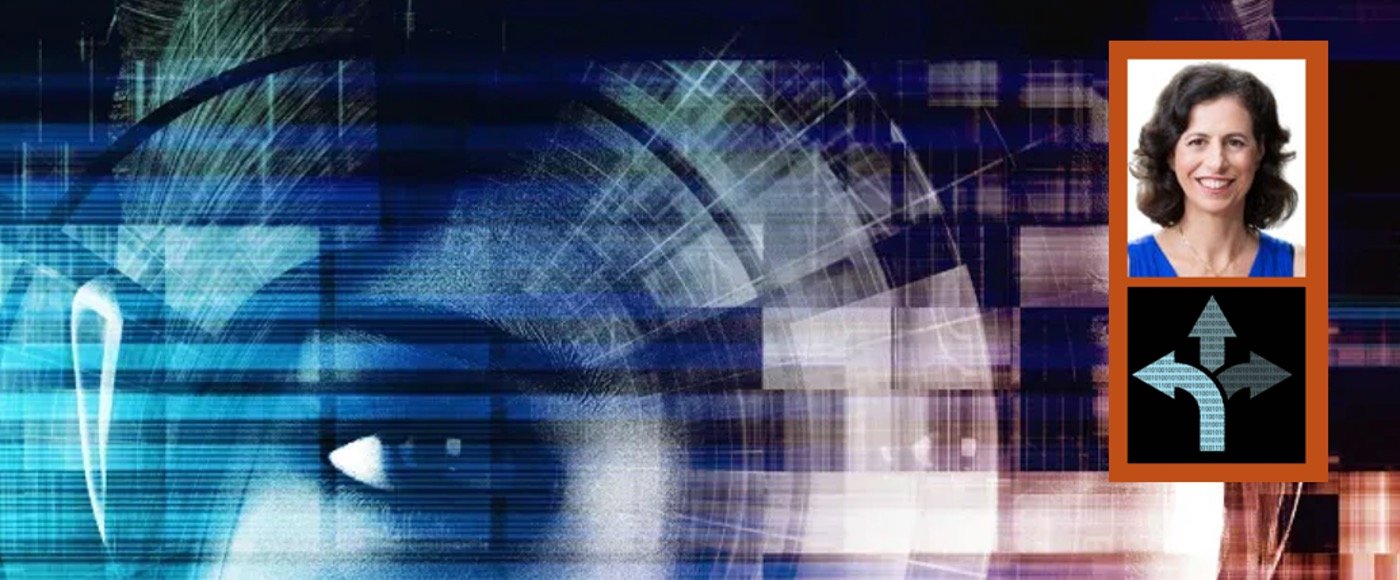
Julie R. Ancis, PhD, is a Distinguished Professor in the Department of Informatics and Founding Director of the Cyberpsychology Program at the New Jersey Institute of Technology. Dr. Ancis is a Fellow of the American Psychological Association (Divisions 17, 35, and 46). Her extensive scholarly publications include 4 books, one book in press, over 80 journal articles, book chapters, and technical reports; and over 200 professional presentations focused on cyberpsychology, multicultural competence, and the legal system.
CONTINUING EDUCATION:
Object Relations Institute for Psychotherapy & Psychoanalysis
2026 ORIPP Digital Dread: Navigating Cyber Anxieties and Ethics in the
Age of AI – Julie Ancis, PhD
August 1, 2026
Online
Joint Accreditation Statement
In support of improving patient care, this activity has been planned and implemented by Amedco LLC and Object Relations Institute for Psychotherapy & Psychoanalysis. Amedco LLC is jointly accredited by the Accreditation Council for Continuing Medical Education (ACCME), the Accreditation Council for Pharmacy Education (ACPE), and the American Nurses Credentialing Center (ANCC), to provide continuing education for the healthcare team.
Professions in scope for this activity are listed below.
Amedco Joint Accreditation Provider Number: 4008163
Psychologists (APA) Credit Designation
This course is co-sponsored by Amedco and Object Relations Institute for Psychotherapy & Psychoanalysis. Amedco is approved by the American Psychological Association to sponsor continuing education for psychologists. Amedco maintains responsibility for this program and content. Maximum of 5.0 hours.
The following state boards accept courses from APA providers for Psychologists/Counselors: AK, AR, AZ, CA, CO, CT, DC, DE, FL, GA, HI, IA, ID, IL, IN, KS, KY, MA (LEP ONLY), MD, ME, MN, MO, NC, ND, NH, NE, NJ, NM, NV, OH, OK*, OR, PA, RI, SC, SD, TN, TX, UT, VA, WA, WI, WY MI: Accepts courses from APA for Psychologists. No general CE requirement for Counselors. OK: Accepts APA credit for live, in-person activities but not for ethics and/or online courses. The following state boards accept courses from APA providers for MFTs: AK, AR, AZ, CA, CO, CT, DE, FL, GA, IA, ID, IN, KS, MD, ME, MO, NE, NC, NH, NJ, NM, NV, OH, OK*, OR, PA, RI, SC, SD, TN, TX, UT, VA, WA, WDC, WI, WY AL MFTs: Credits authorized by NBCC or any other state licensing agency will be accepted. MA MFTs: Participants can self-submit courses not approved by the MAMFT board for review. MI MFTs: There are no CE requirements for MFTs in MI. The following state boards accept courses from APA providers for Addictions Professionals: AK, AR, CO, CT, DC, DE, GA, IA, IN, KS, LA, MD, MO, MT, NC, ND, NE, NJ, NM, NY (held outside NY ONLY), OK*, OR, SC, UT, WA, WI, WY The following state boards accept courses from APA providers for Social Workers: AK, AR, AZ, CA, CO, DE, FL, GA, ID, IN, KY, ME, MN, MO, NE, NH, NM, OR, PA, VT, WI, WY
New York Social Workers
Amedco SW CPE is recognized by the New York State Education Department’s State Board for Social Work as an approved provider of continuing education for licensed social workers #0115. 5.0 credit hours.
New York Psychologists
Amedco is recognized by the New York State Education Department’s State Board for Psychology as an approved provider of continuing education for licensed psychologists #PSY-0031. 5.0 hours.
To receive CE certificates for the actual hours attended – please request them at the time of registration or any time prior to beginning of the conference. CE certificate fee: $25 (in addition to the registration fees). No fees charged for PD (Professional Development) certificates from ORI.
REGISTRATION, TUITION, & FEES:
Early Bird registration (before July 5th, 2026):
$50 regular/ $35 graduate students & analytic candidates/ $15 undergraduate students
Regular registration (from July 5th, 2026 – to July 31st, 2026 – before 6pm EDT/NYC time):
$65 regular/ $45 grad students & candidates/ $20 undergrad students
Registration ‘at the door’ (after 6pm EDT/NYC time on July 31st, 2026):
$75 regular/ $55 grad students & candidates/ $25 undergrad students
Please Note: IF CEs ARE REQUESTED — please use the “regular” registration (not a “student”) option. There is an additional fee of $25 for CE certificate processing (can be paid on the day of the conference or in advance).
SPECIAL SCHOLARSHIPS are available for undergraduate and graduate students, as well as for retired or disabled practitioners, or need-based.
CANCELLATION POLICY:
Full refund will be issued if cancelled before the beginning of the event.
No refund will be issued if cancelled after the beginning of the event, but full paid tuition will be applied to any further ORI events.
Loading
Form successfully restored
The form has been restored from your last edit. If wish to start over, please click the button
We have received your request
%DESIGNATIONMSG%
Server Side Error
We faced problems while connecting to the server or receiving data from the server. Please wait for a few seconds and try again.
If the problem persists, then check your internet connectivity. If all other sites open fine, then please contact the administrator of this website with the following information.



 In support of improving patient care, this activity has been planned and implemented by Amedco LLC and Object Relations Institute for Psychotherapy & Psychoanalysis. Amedco LLC is jointly accredited by the Accreditation Council for Continuing Medical Education (ACCME), the Accreditation Council for Pharmacy Education (ACPE), and the American Nurses Credentialing Center (ANCC), to provide continuing education for the healthcare team.
 This course is co-sponsored by Amedco and Object Relations Institute for Psychotherapy & Psychoanalysis. Amedco is approved by the American Psychological Association to sponsor continuing education for psychologists. Amedco maintains responsibility for this program and content. Maximum of
